The wilderness of Lakeland is not a distant, untouched idea—it is a working landscape of forests, lakes, and quiet marshes where wildlife still moves on its own terms. For visitors, it offers a chance to observe and photograph animals in their natural environment, often only a short drive from small towns and villages.
Bear, wolverine, wolf, European elk, owls, eagles, Ospreys, migratory birds, Saimaa ringed seal and flying squirrels are all part of the region’s ecosystem. Seeing them is never guaranteed, but that is exactly what shapes the experience.
Unlike structured attractions, wildlife watching here follows the rhythm of nature. Early mornings, late evenings, and long patient hours in hides or along forest edges are part of the process. Guides help visitors understand tracks, feeding areas, and seasonal behavior, but the animals decide the rest.
Forest Predators and large Mammals
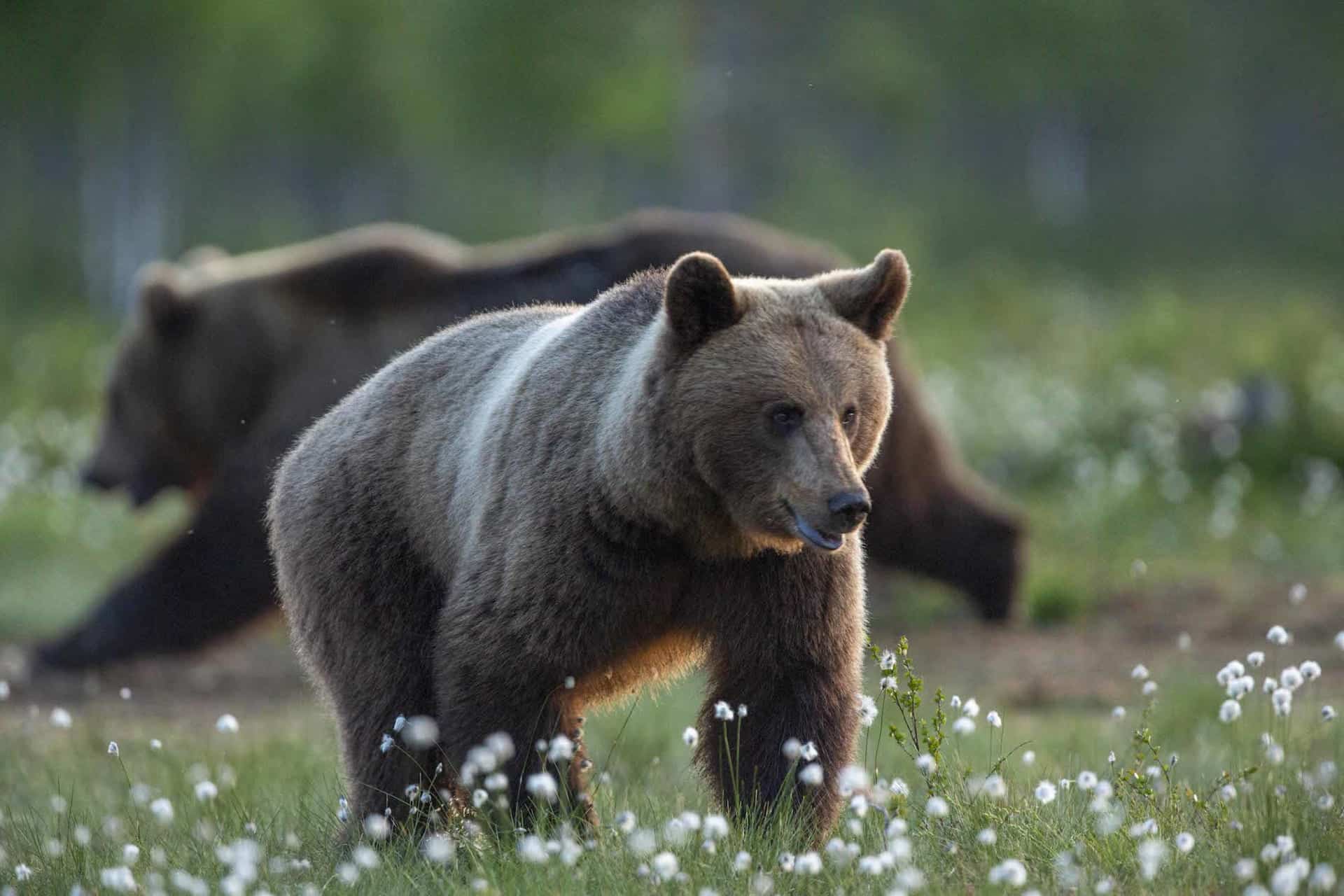
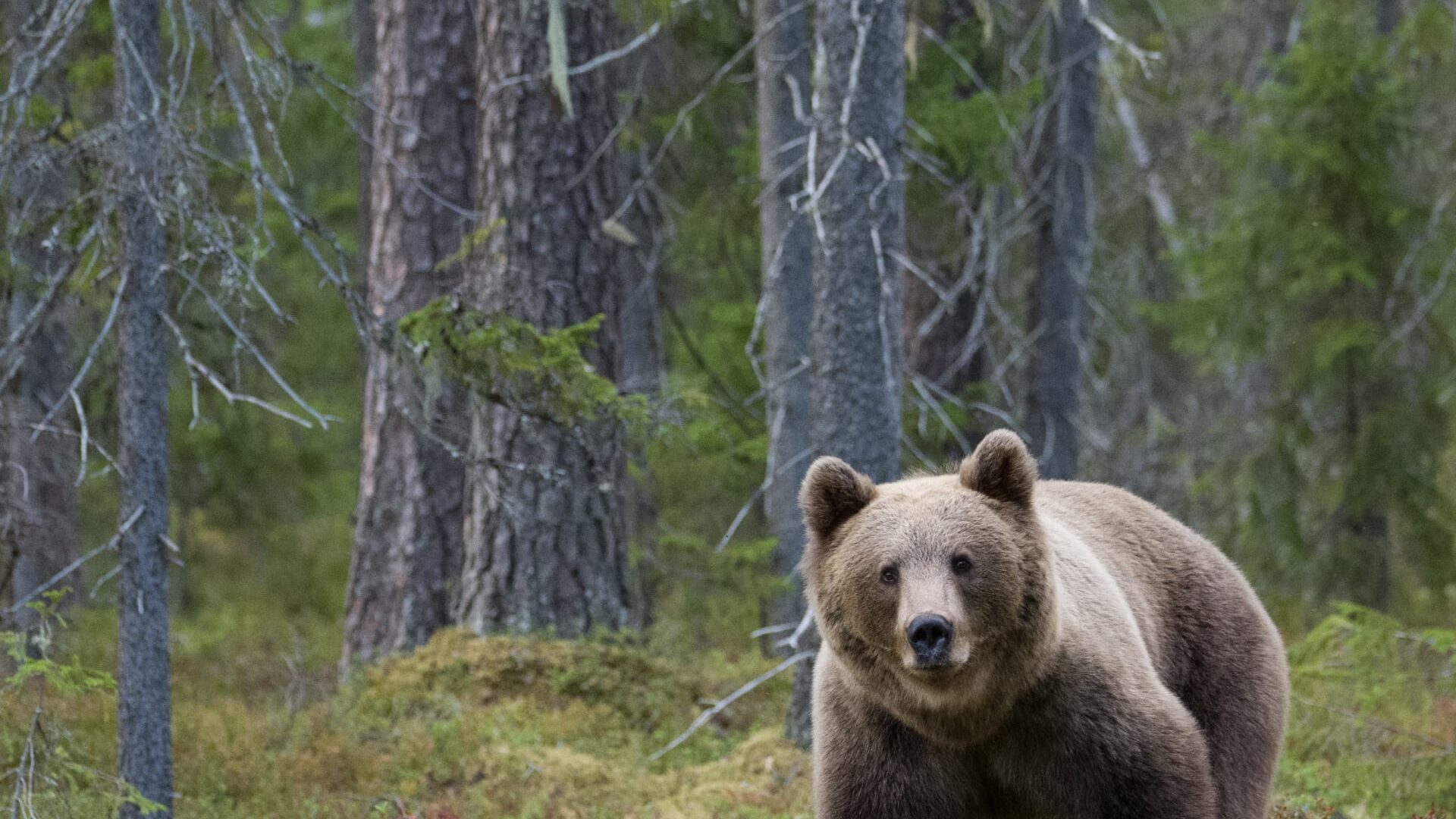
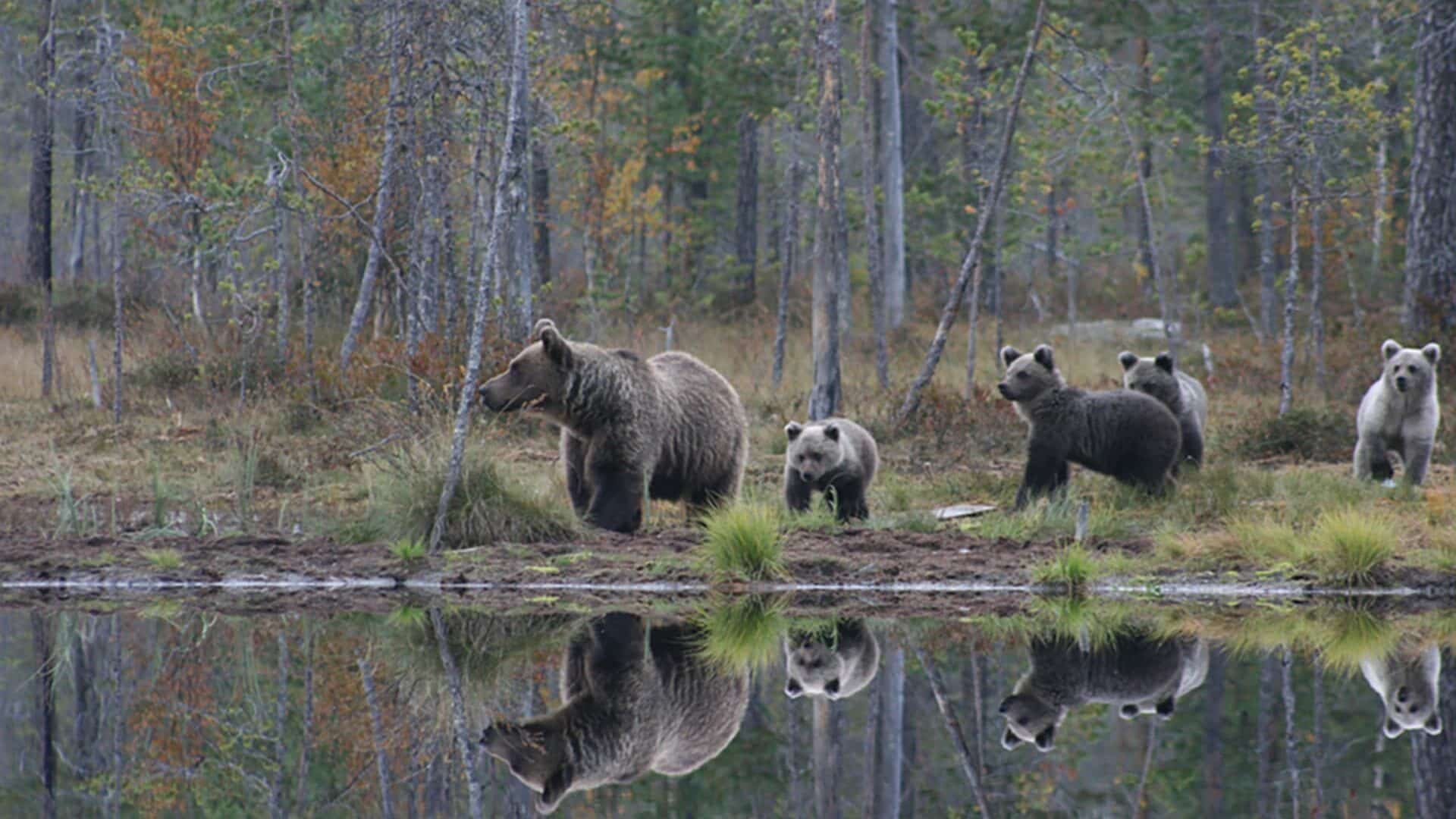
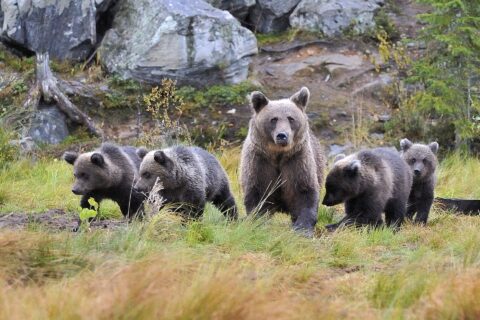
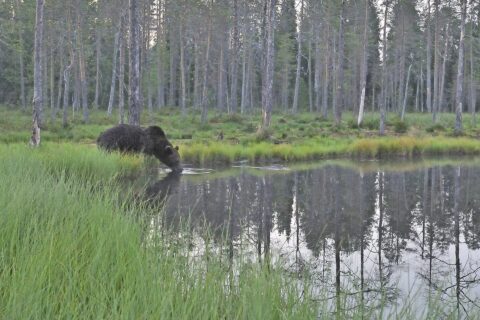
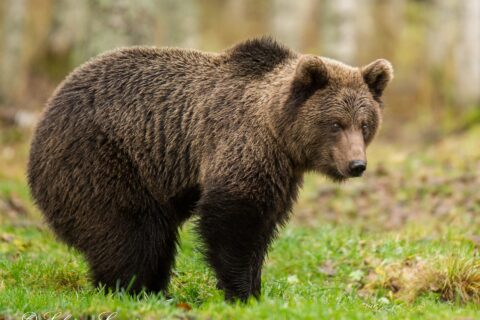
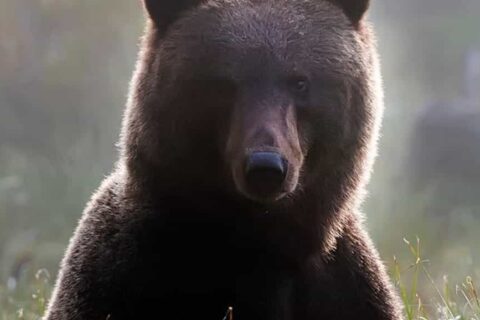
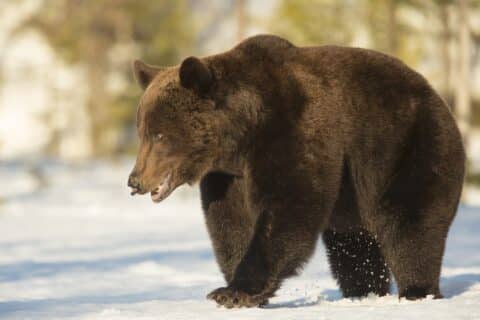
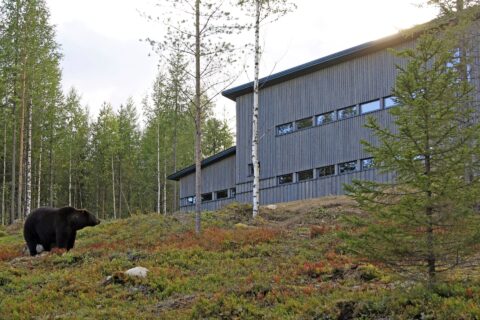
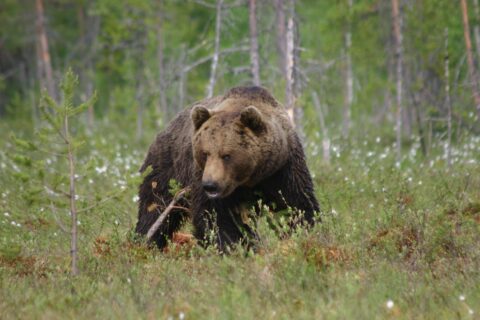
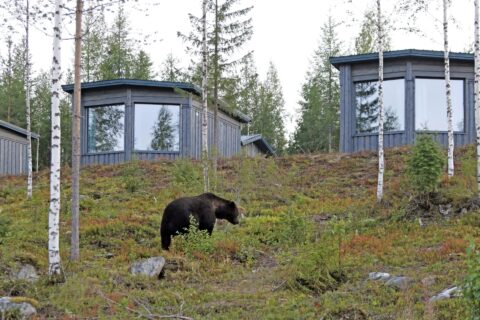
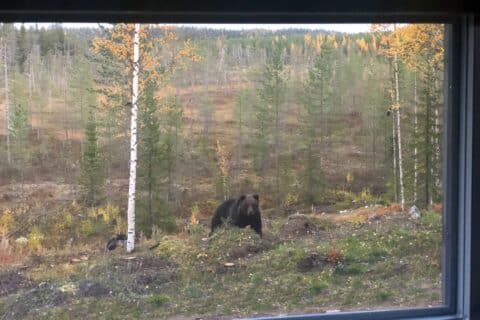
The bear is one of the most sought-after species, specifically in the Eastern parts of Lakeland Finland. Observing it usually takes place from specially designed photography hides located near feeding areas in remote forest zones. Even from a safe distance, the bear’s movements—slow, deliberate, and powerful—stay with you long after the shutter clicks.
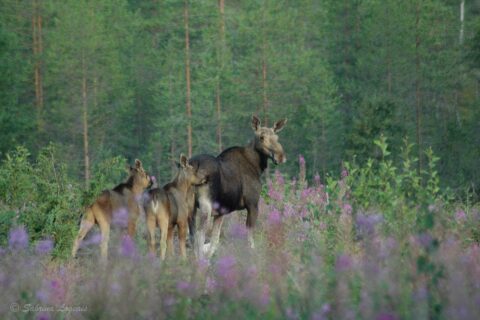
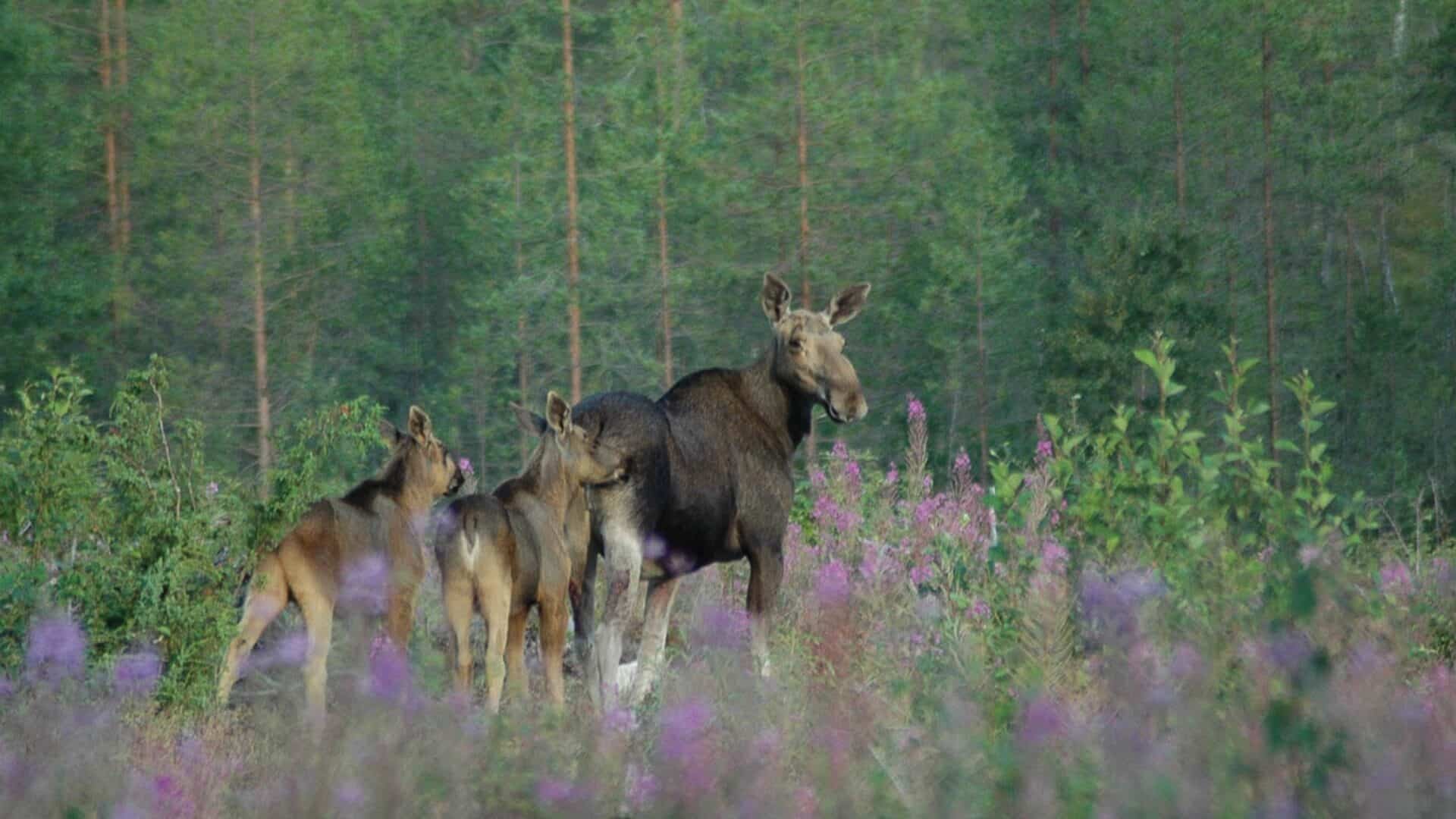
European elk (moose) are more commonly seen, especially at dawn or dusk near forest edges and wetlands. Their size becomes even more striking when they move through shallow water or stand still among young birch trees.
— Lassi Rautiainen, Wildlife Safaris Finland
“In the northernmost part of Lakeland Finland, the Arctic Lakeland region offers a truly unique wildlife photography experience, where you can photograph iconic species like bears, wolves, wolverines and white-tailed eagles from well-equipped hides—sometimes all within just a few hours, which is something you won’t find anywhere else. The hide itself is an exciting experience to share with family or friends, combining anticipation, silence and a close connection to nature.
With carefully managed sites and ready-made services including accommodation, transport and guiding, everything is designed for unforgettable encounters. For the best conditions, mammals on snow are ideal from early March to mid-April and again in November, while the main season from April to October offers excellent opportunities, especially when bears are active. My recommendation for first-time visitors is to dress for the season—remember mosquito spray or special clothing in summer—and embrace a slower pace while enjoying the surrounding nature.”
Where to experience Wildlife
A rare treasure of Lake Saimaa
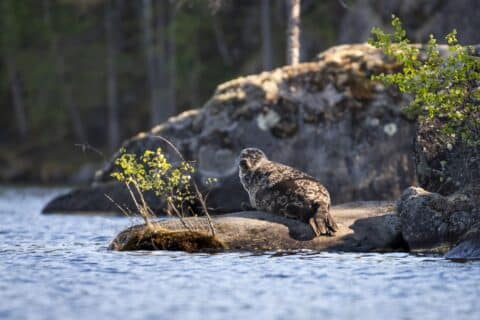
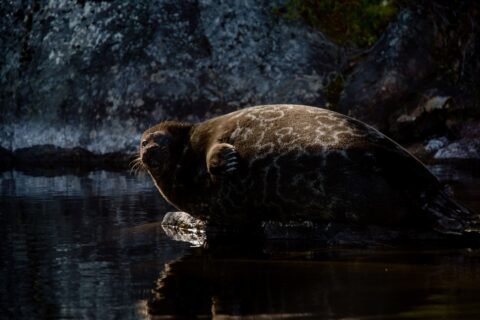
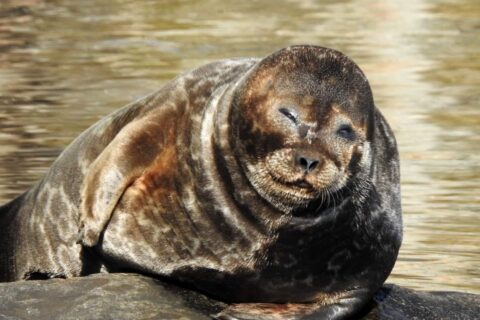
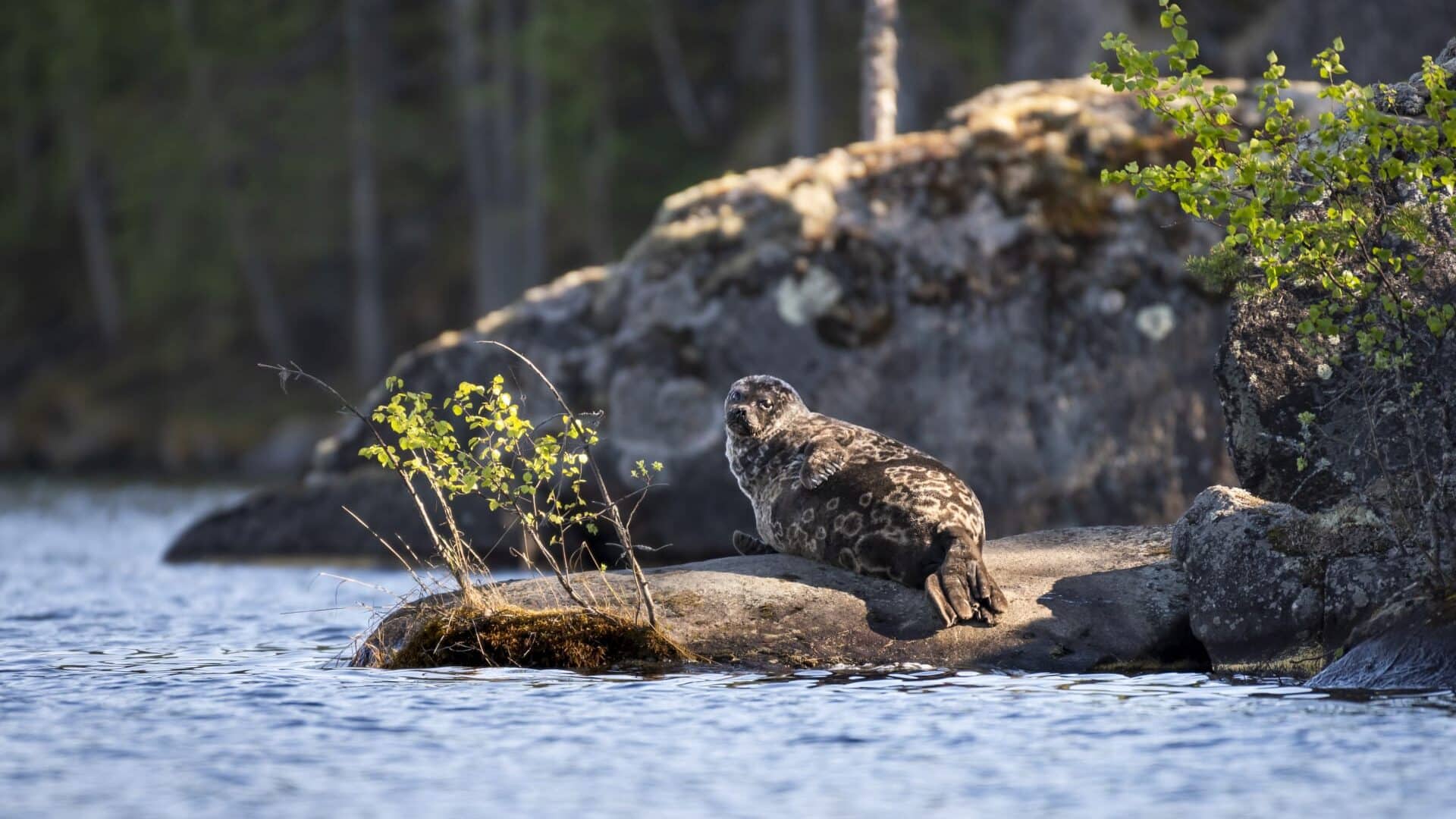
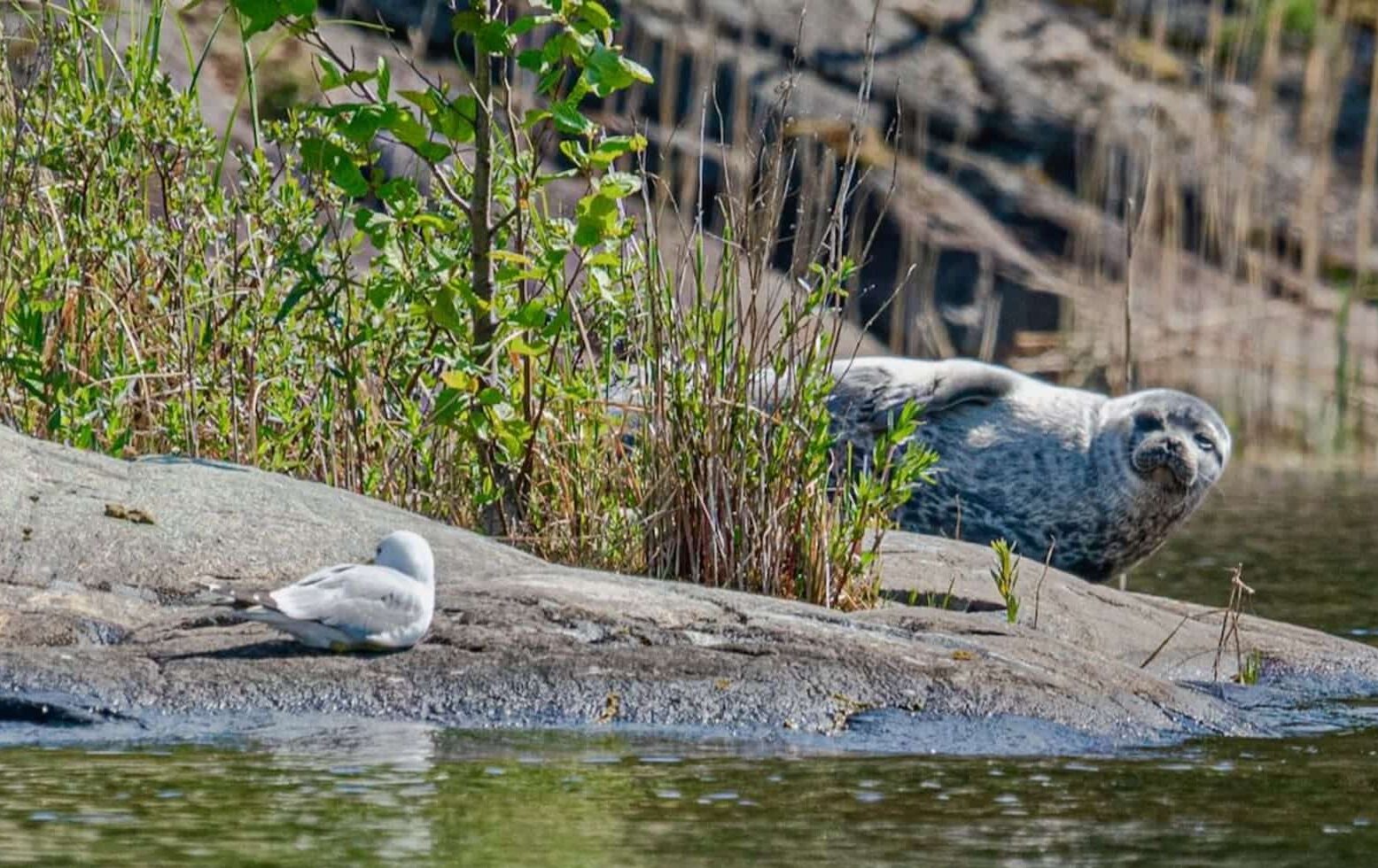
The Saimaa ringed seal is one of Finland’s most unique and beloved wildlife species—and one of the rarest seals in the world. Found only in the labyrinthine waters of Lake Saimaa, this freshwater seal is a true symbol of the Finnish Lakeland region. With a population of just over 500 individuals, the Saimaa ringed seal is highly endangered. It evolved from marine ringed seals after the last Ice Age, when Lake Saimaa became isolated from the sea. Over thousands of years, it adapted to life in freshwater, making it a species you simply won’t find anywhere else on Earth. The best time to try to see a Saimaa ringed seal is from late spring to early summer, when they often haul out onto rocks to bask in the sun. Popular areas for sightings include parts of Linnansaari National Park, Kolovesi National Park and Puumala Archipelago, where conservation efforts are strong and nature remains peaceful.
Guided seal-watching tours are recommended—not only do they increase your chances of a sighting, but they also ensure you observe these animals responsibly without disturbing them.
Birds of prey and nocturnal species
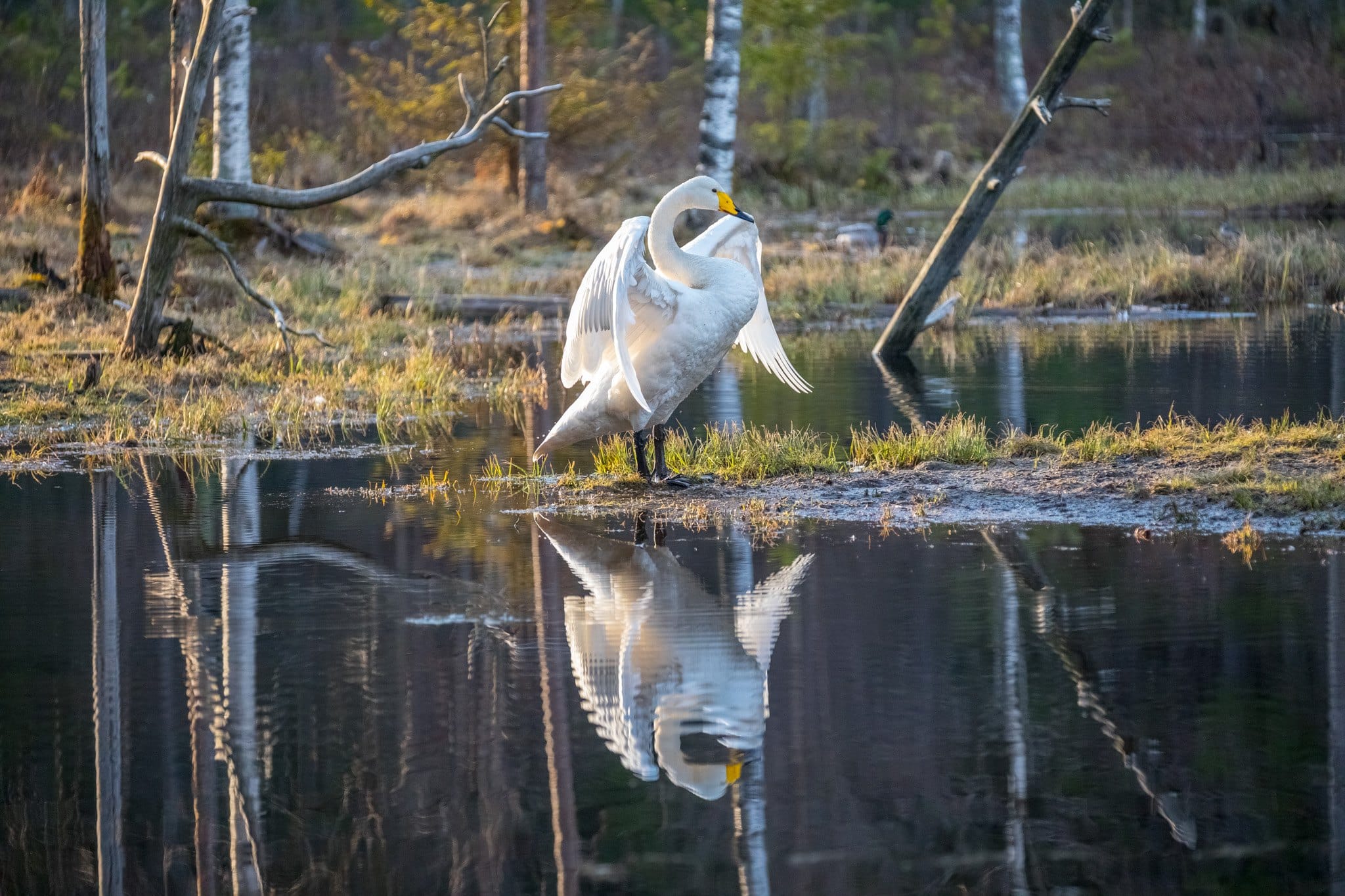
Lakeland Finland comes alive each year with the rhythm of migration, as thousands of birds return to its lakes, wetlands, and forests. For visitors, this seasonal movement offers some of the most dynamic wildlife experiences in Northern Europe. In spring, the skies fill with migratory birds arriving after long journeys—bringing sound, color, and energy back to the landscape. Whooper swans glide onto thawing lakes, common cranes gather in open marshes, and flocks of geese and ducks rest and feed along the shores. For photographers, this is a time of constant motion and interaction, where early mornings are filled with calls echoing across still water.
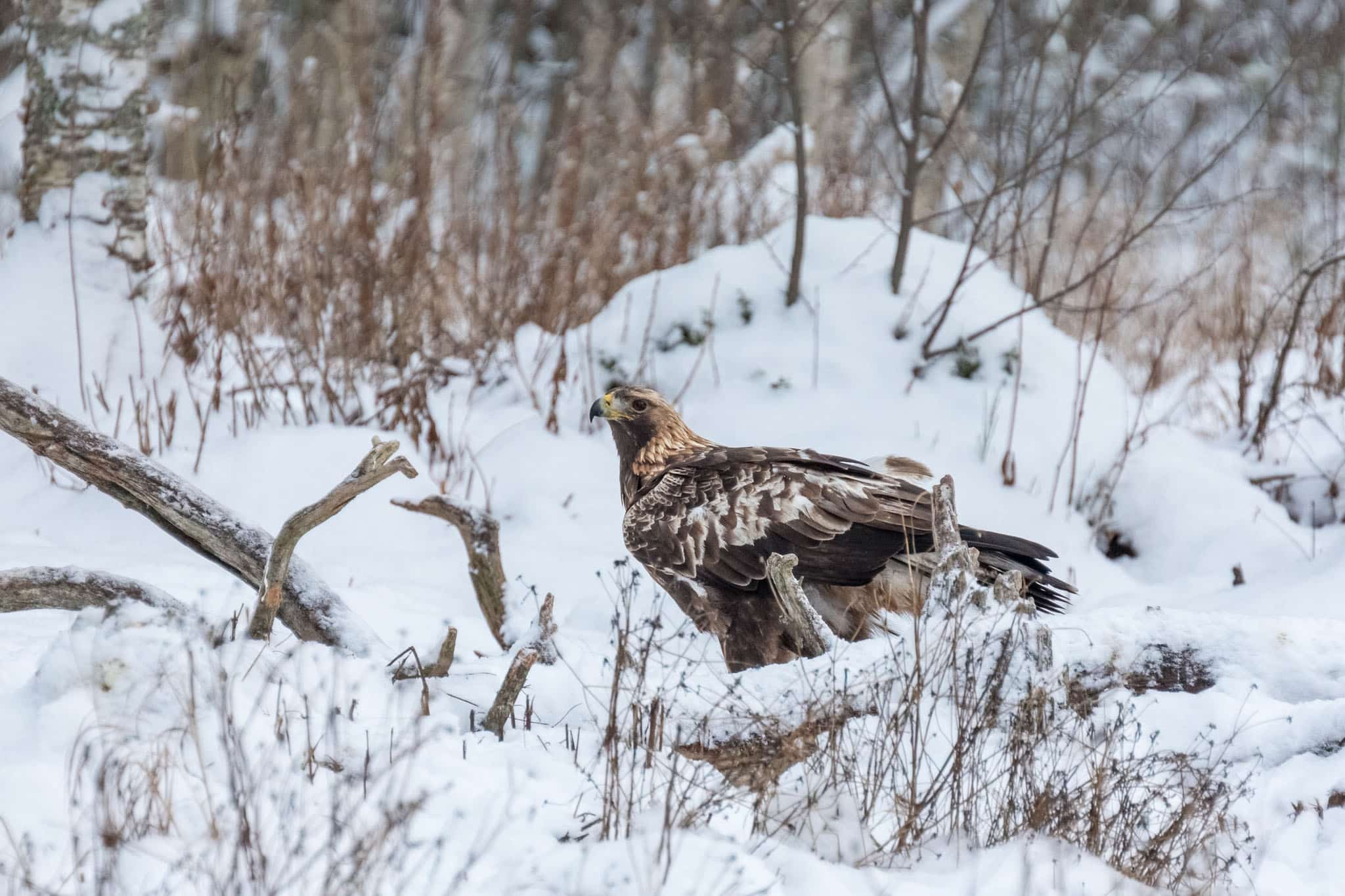
Birdlife in Lakeland is equally compelling beyond the migration peaks. Eagles, particularly white-tailed eagles, are often seen near open water, scanning for fish or circling above vast lake systems. Their presence adds a sense of scale and wilderness that defines the region. Owls, by contrast, reveal themselves more quietly—sometimes only through their calls at dusk or during the night, long before they are spotted among the trees. This contrast between the bold and the elusive is part of what makes birdwatching here so rewarding.
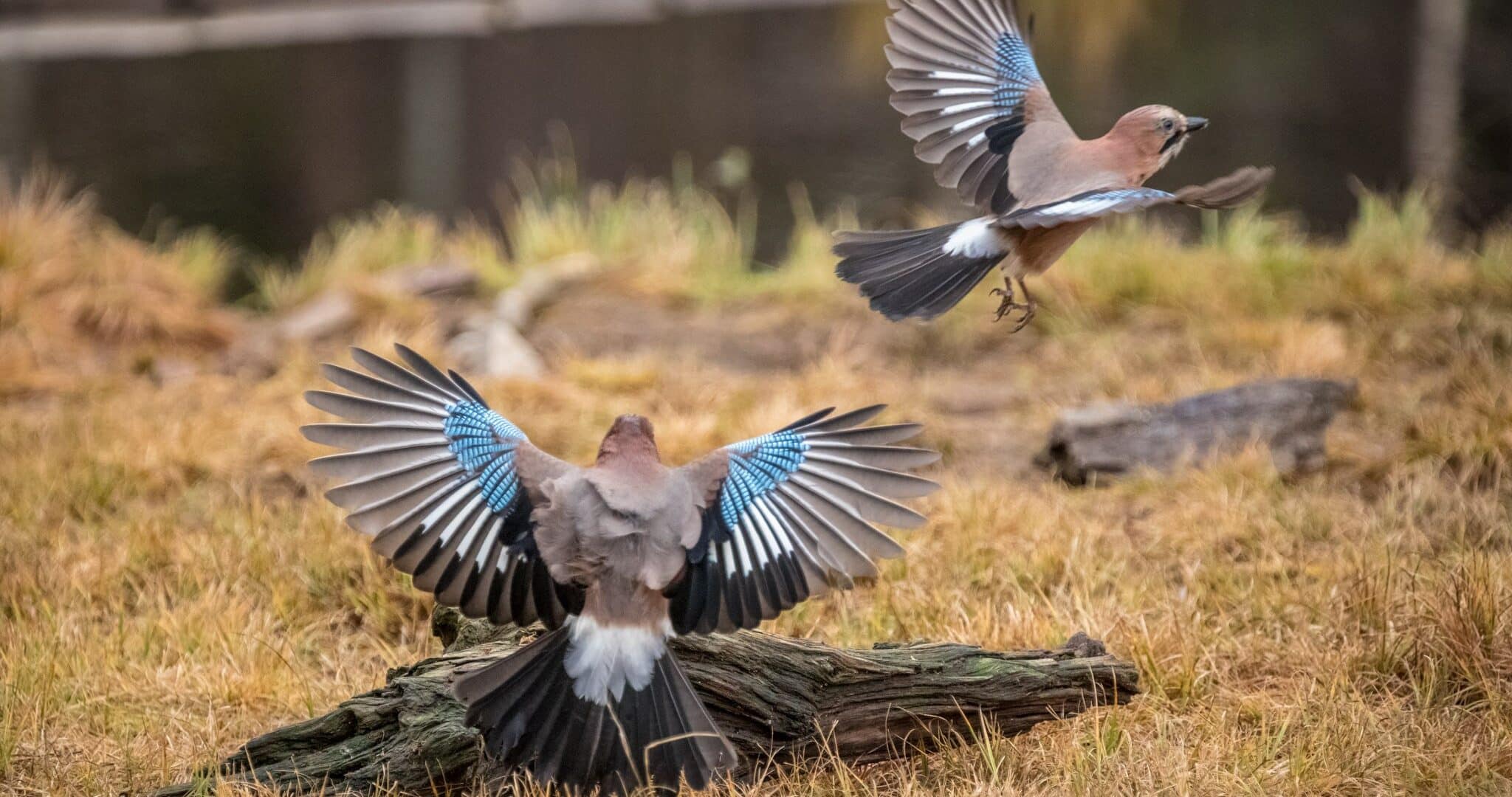
Voices of the Forest
Unlike migratory species that pass through on seasonal journeys, the resident birds of the boreal forest are here year-round. They move quietly through spruce and pine, often detected first by sound rather than sight—a call from deep within the trees, a branch that moves without wind.
For photographers, they demand a different kind of patience than open-water species, but when the moment comes together, it offers something the open sky cannot: a feeling of being deep inside a living forest, on its own terms.
A shy Wanderer of the Forests
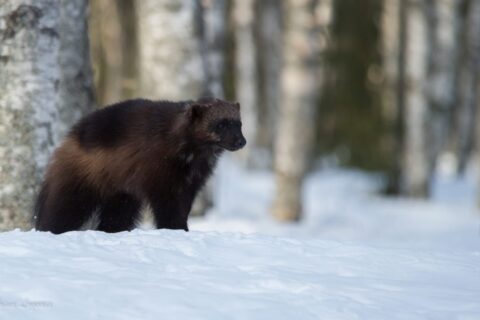
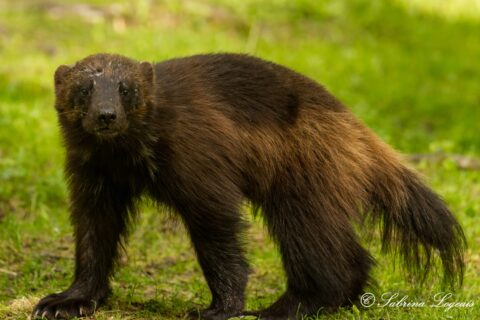
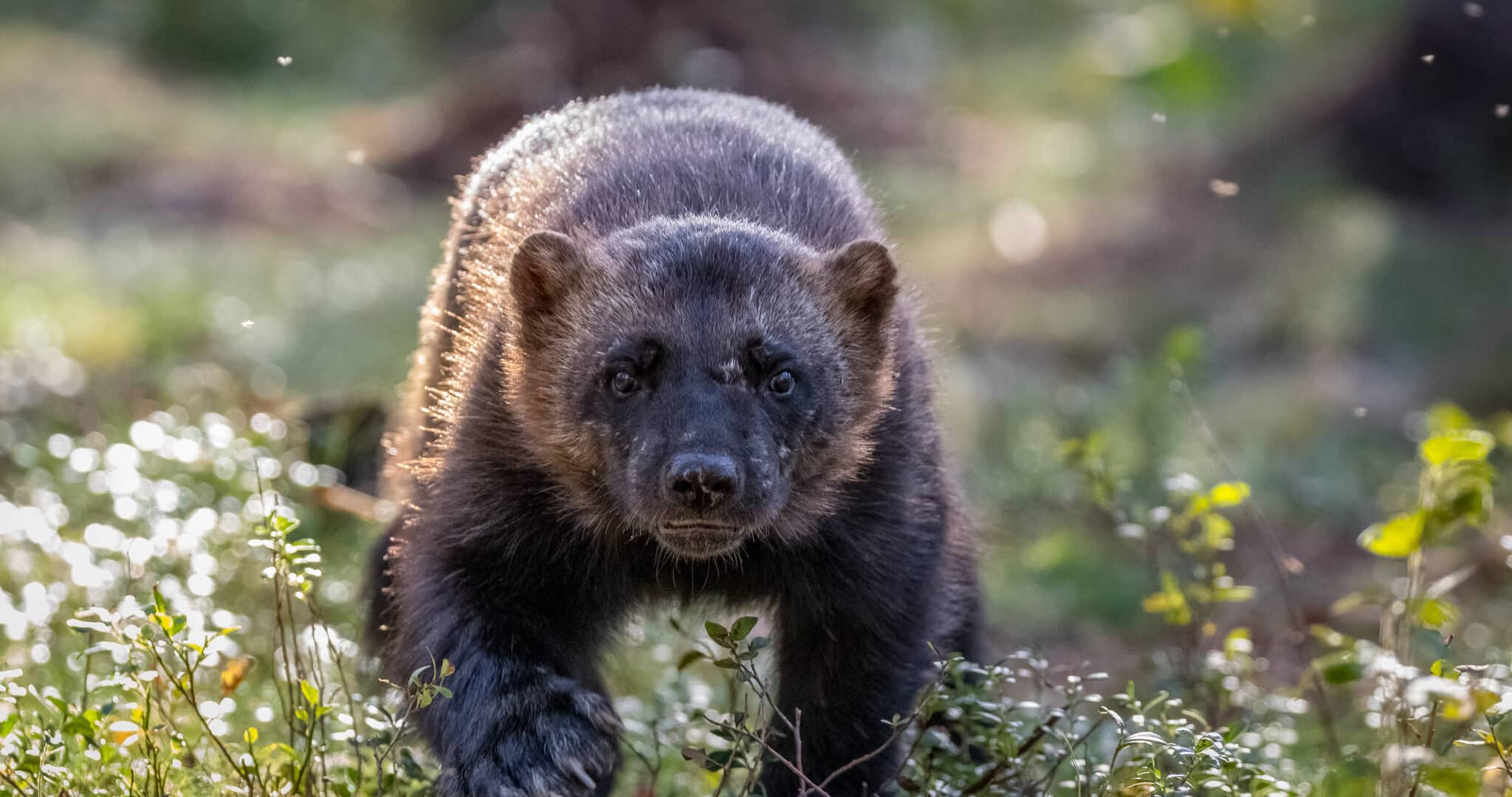
The wolverine is one of Finland’s most elusive predators and a symbol of wild Lakeland nature. Though small, it is strong, resilient, and built for cold climates. Wolverines can travel long distances across forests and frozen lakes. Sightings are rare, but late winter offers the best chance, especially on guided tours from hides.
Wolves of Lakeland
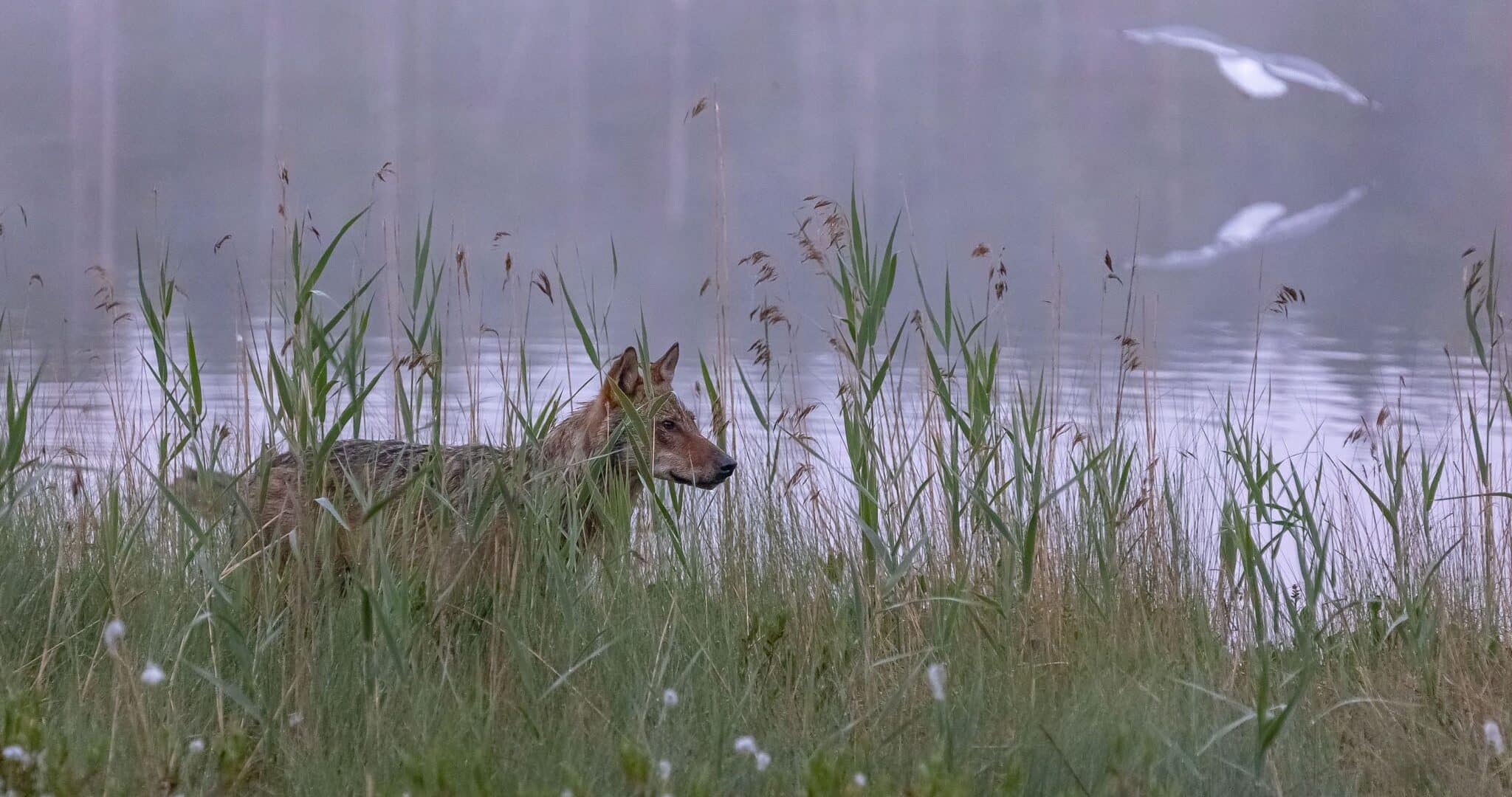
The Grey wolf is a rare and powerful symbol of wilderness in Finland’s Lakeland. Living in small packs, wolves roam vast forests and remote areas, playing a key role in maintaining ecological balance. They are shy and avoid humans, so sightings are uncommon. Traces in snow or guided tours offer the best chance to experience their presence.
A subtle but powerful presence
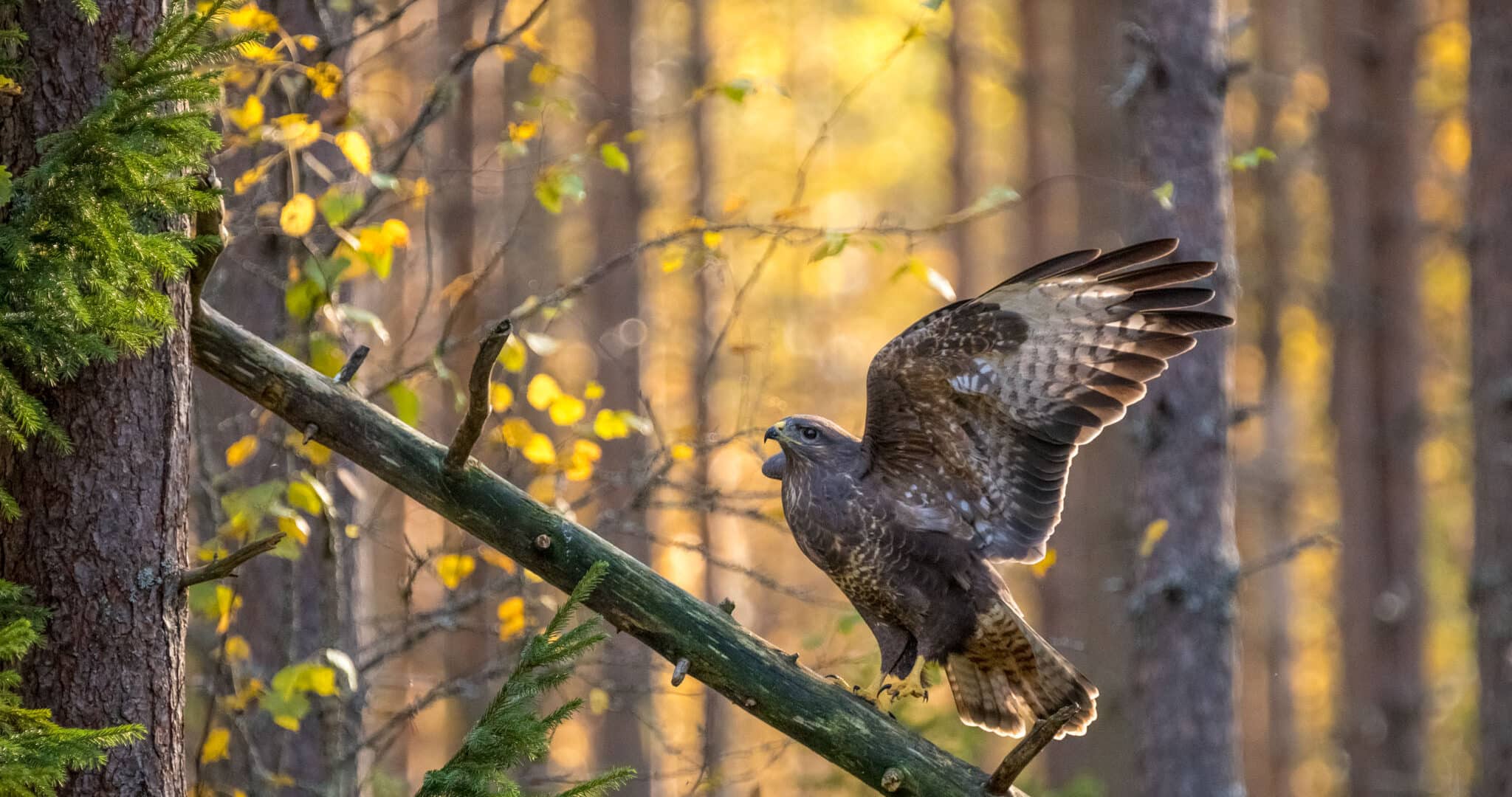
Unlike white-tailed eagles that dominate open skies, hawks in Lakeland Finland are more about precision and concealment. Their presence is often detected before they are seen—by the sudden silence of small birds or a quick movement through dense spruce forest. For wildlife observers and photographers, hawks represent a more challenging subject. Encounters are usually brief, but precisely because of this, they offer a rewarding sense of unpredictability.
A lively companion in nature and town
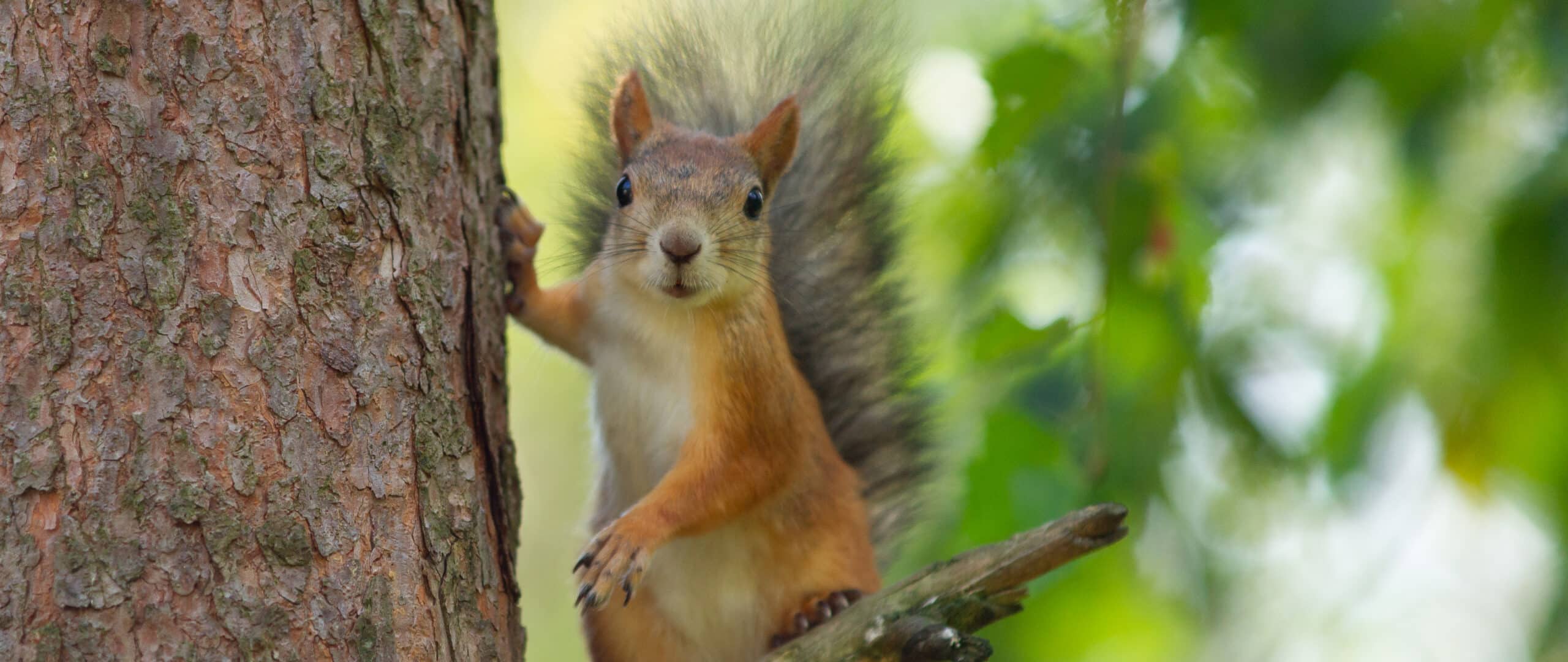
The Eurasian red squirrel is one of the most charming and familiar animals you’ll encounter in Finland’s Lakeland—both deep in the forest and right in the heart of towns and cities. Squirrels are active year-round and don’t hibernate, so every season offers a chance to see them. Early mornings and late afternoons are especially good times, when they are busiest searching for food. Although squirrels in urban areas may seem tame, they are still wild animals. It’s best to observe them from a respectful distance and avoid feeding them human food. Lakeland is actually one of the key areas where also the Siberian flying squirrel lives in Finland. Its presence shows that the forest has remained natural and diverse over time.
Where to experience Wildlife


Photographing Wildlife in Arctic conditions
Wildlife photography in the Nordics requires more than equipment. Conditions change quickly, and animals are not staged. Long lenses are essential for ethical distance. Neutral clothing helps blend into the environment, and silence matters as much as timing.
Light plays a central role. In summer, long evenings and soft golden light extend shooting opportunities late into the night. In autumn, low sun angles bring strong contrasts and color. Winter adds snow, which simplifies backgrounds but requires careful exposure control. Patience is not optional—it is the method.
Respecting the Wilderness
Wildlife observation in Lakeland Finland is based on distance and respect. Animals are not handled or disturbed, and viewing is designed to minimize impact on their behavior. Visitors are encouraged to follow guide instructions carefully and to accept that nature cannot be scheduled.
A silent forest, a movement in the trees, a shadow over a lake—these moments define wildlife photography in Lakeland.
We welcome you to Lakeland Finland
Are you ready for your adventure here at Lakeland Finland?
We hope to see you soon.