
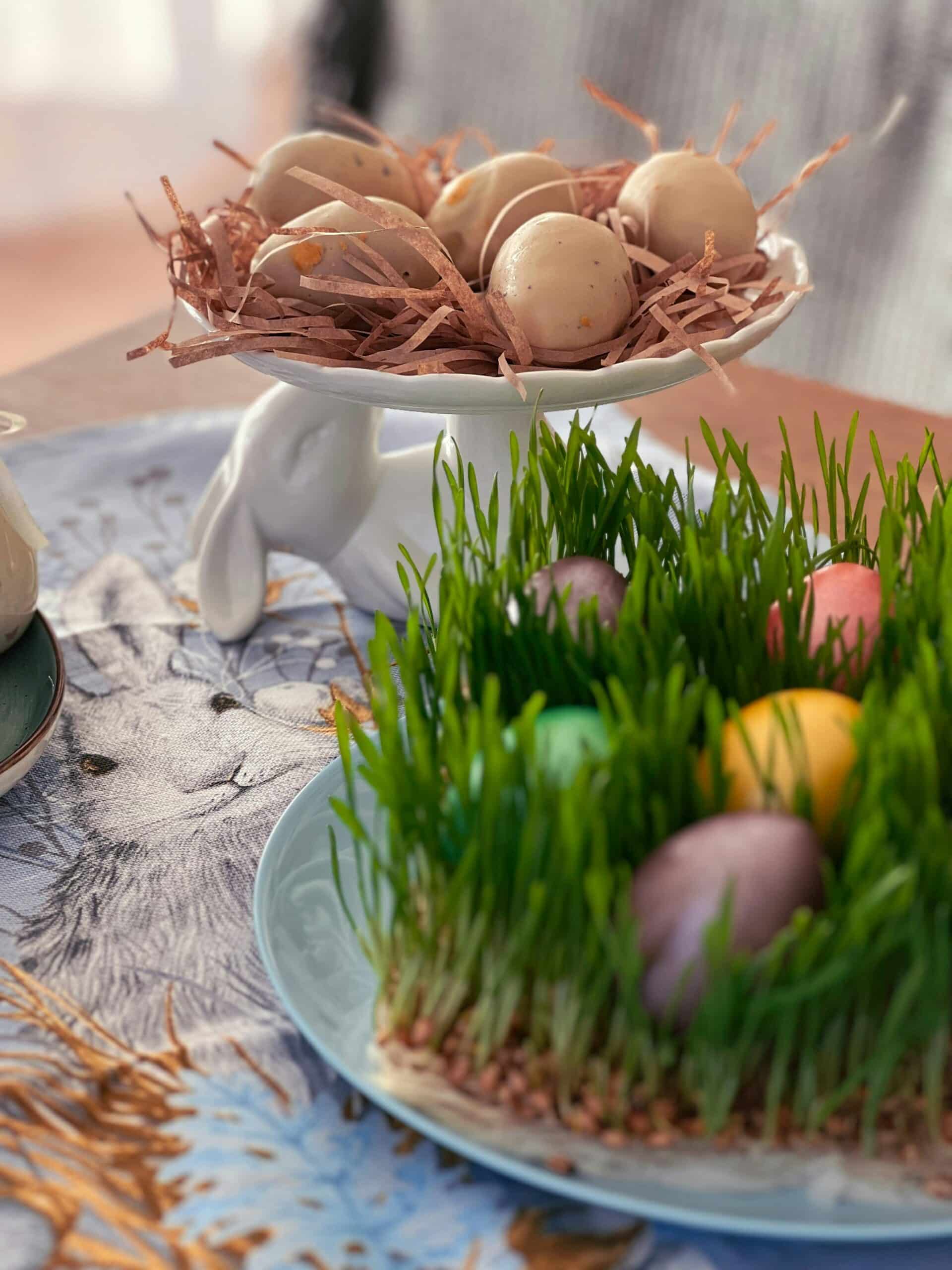
Easter in Lakeland Finland is the moment when winter slowly gives way to spring. Snow often still blankets the forests and frozen lakes, but the days are longer and sunlight glints off ice and frost. Families gather at home, preparing traditional foods like boiled eggs, rye bread, and roasted lamb in the kitchen. Bright green Easter grass line windowsills. For visitors, Easter here is about experiencing local life up close: hands-on cooking, early spring light reflecting on frozen waters, and small seasonal rituals that mark the change of season.
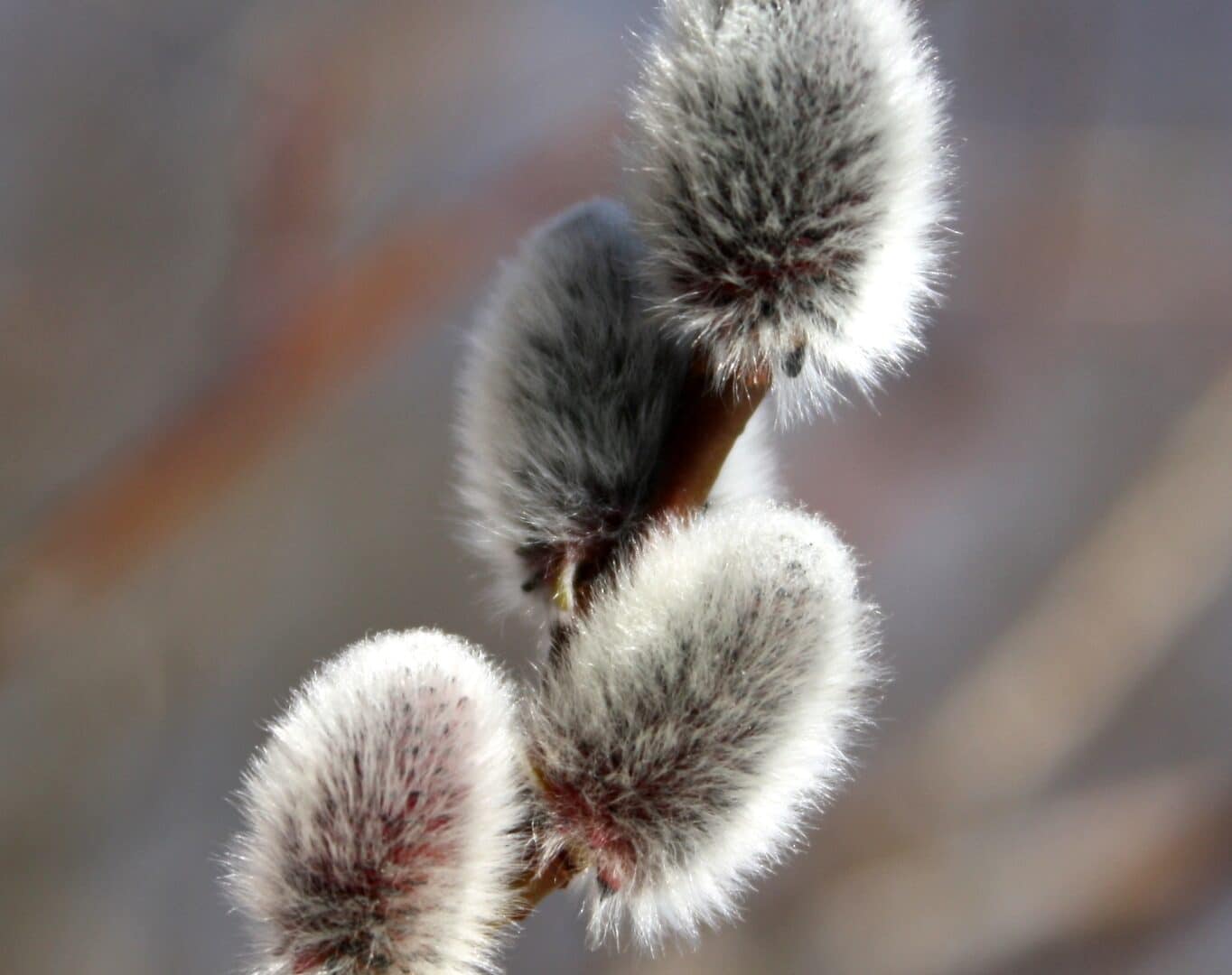
Willow branches, Witches, and Easter Grass
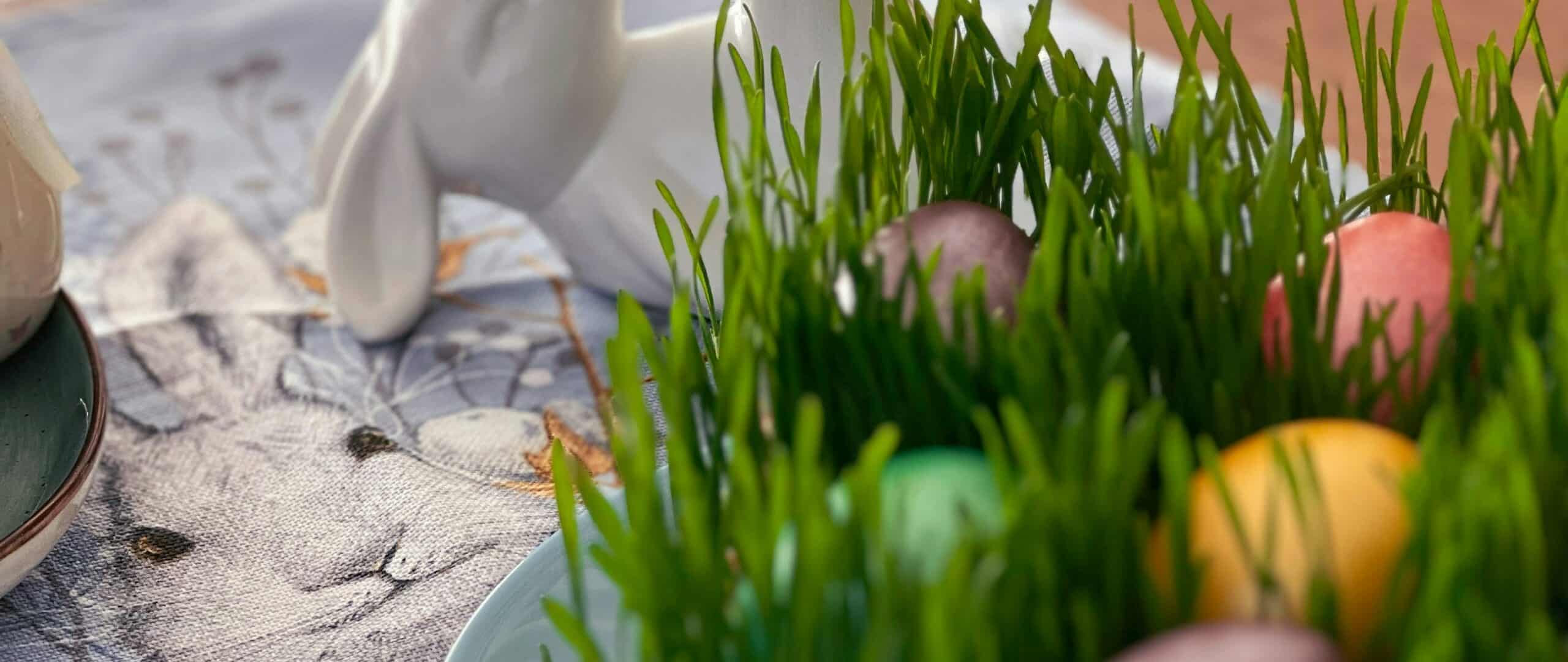
In Finland, Easter mixes Christian traditions with old folk customs. One of the most visible is the use of decorated willow branches. Children and families decorate willow twigs with feathers and ribbons and bring them indoors as signs of spring. In many homes, people also grow Easter grass on a plate or shallow dish. The bright green shoots on the windowsill are a simple but familiar part of the season.
Children dress as Easter witches
In many parts of Finland, especially on Easter Saturday, children dress as Easter witches. With scarves, skirts, freckles painted on their cheeks, and coffee pots or baskets in hand, they go from door to door offering a traditional blessing spell in exchange for sweets. The custom may remind visitors of Halloween, but the atmosphere is lighter and closely tied to local Easter folklore. In Lakeland towns and residential areas, it is still common to see small groups of children walking along the streets in costume.
Food That Belongs to Easter
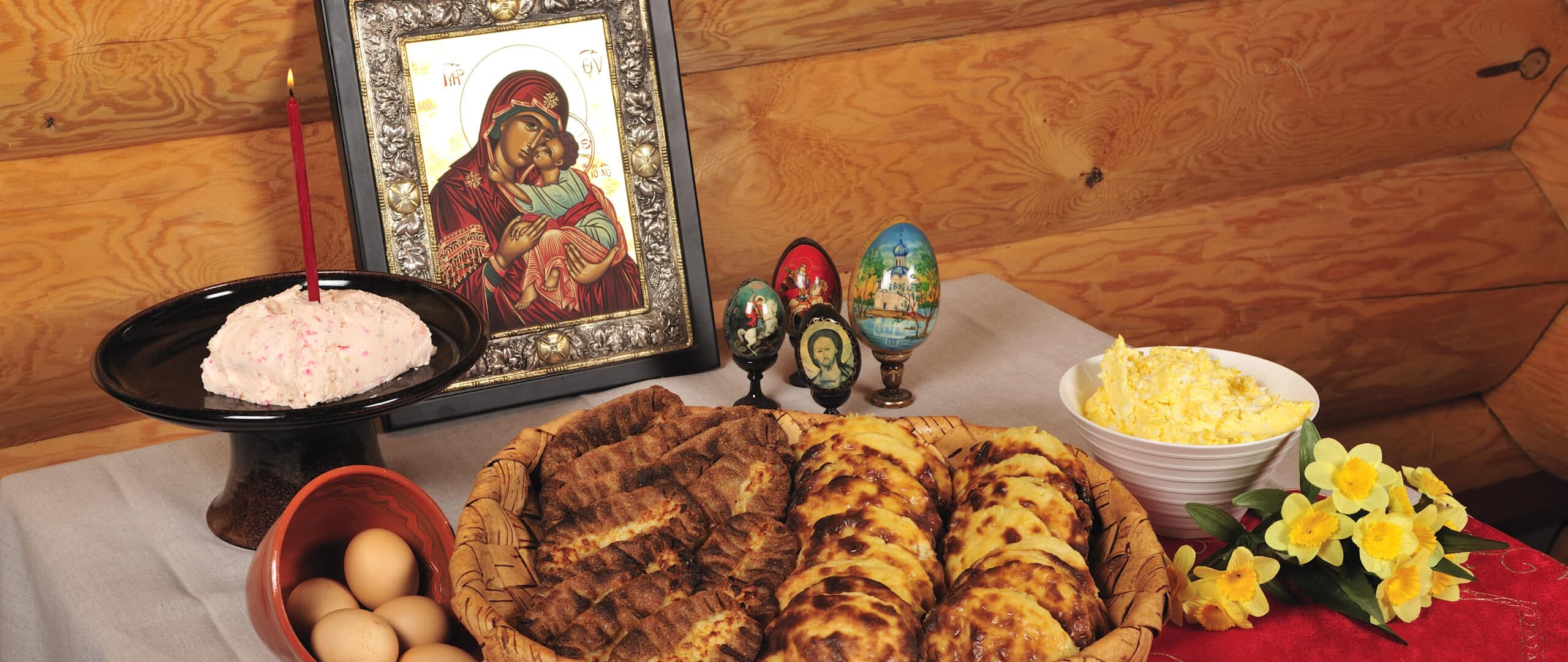
Easter in Finland has its own set of traditional dishes. Tables often include roast lamb, cured fish, egg dishes, rye bread, and spring desserts. Two foods appear especially often: mämmi, a dark malted rye pudding served cold with cream or milk and sugar, and pasha, a rich dessert made from fresh cheese, butter, and dried or candied fruit. For many Finnish families, these are not everyday foods but things eaten specifically at Easter.
In Lakeland, Easter meals are often enjoyed at home or at the cottage, where the pace is slow and the focus is on eating well, spending time together, and getting outside between meals.
Also a Church Holiday
In some parts of Finland, Easter bonfires are lit on Easter Saturday. The fires have roots in old beliefs connected to driving away evil spirits, and today they bring people together outdoors at the end of winter. Not every town or village arranges them, but where they are held, they are a clear sign that spring celebrations have started.
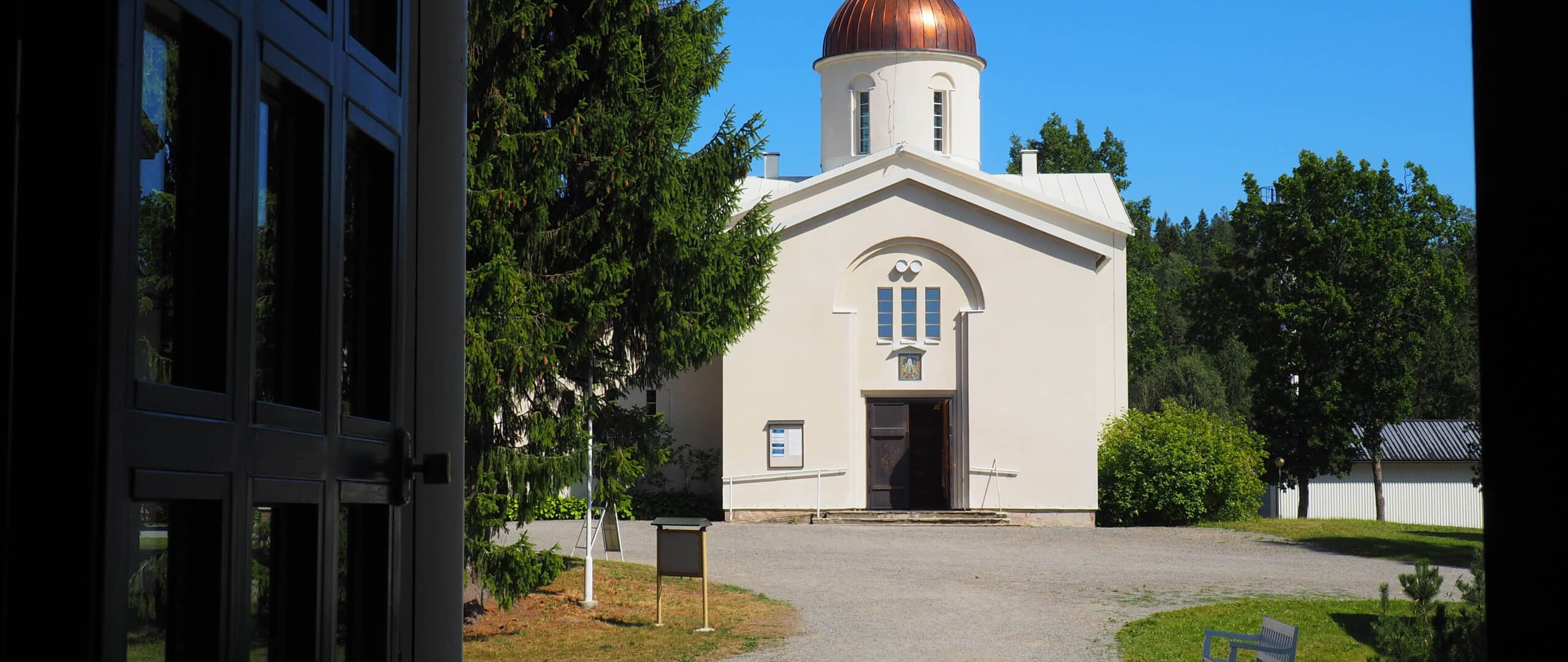
Easter is also a church holiday, and for some people this remains an important part of the weekend. Church services, cemetery visits, and quiet family gatherings continue alongside the more playful traditions. In Lakeland, the holiday often feels calm rather than crowded. Roads to cottages become busy, but village centres and lakeside landscapes stay peaceful.
A Spring Holiday Spent Outdoors
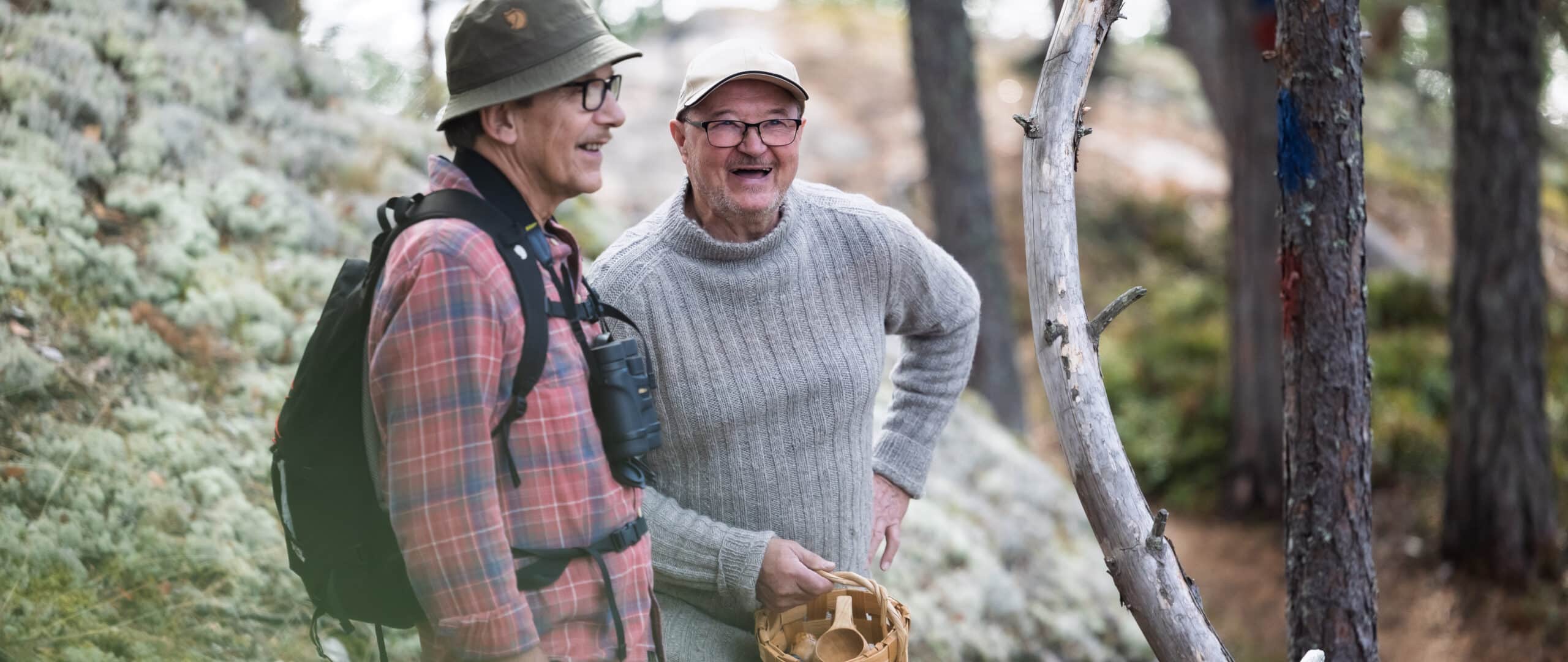
Even when Easter is centred on food and family, people in Lakeland also go outside. Depending on the year and the weather, visitors may find ski trails in good condition, walk on forest paths packed with spring snow, or sit in the sun against a cabin wall while meltwater runs from the roof. Children look for chocolate eggs, adults prepare the sauna, and many families combine Easter lunch with a walk by the lake.
This is what makes Easter in Lakeland Finland easy to understand as a visitor. It is not built around one large event or spectacle.
It is a season of small, concrete things: willow branches in a vase, children in witch costumes, a table set with mämmi and lamb, smoke from a bonfire, and the first strong spring light over the lake.
We welcome you to Lakeland Finland
Are you ready for your ice swimming adventure here at Lakeland Finland?
We hope to see you soon.
